
Cosmetic dentistry in Australia is entering a more reflective phase. Where once the pursuit of a “perfect smile” was dominated by uniform whiteness and dramatic transformations, today’s conversation is quieter, more nuanced, and ethically informed. Nowhere is this shift more evident than in the way dental veneers are discussed and delivered in communities like Greenvale, where patients increasingly value authenticity over exaggeration.
This evolution is not a rejection of cosmetic dentistry, but a maturation of it. Veneers remain one of the most powerful tools in modern restorative and aesthetic care—but how, why, and for whom they are used has changed significantly. Dentists and patients alike are exploring the rising trends that prioritise biological preservation, psychological wellbeing, and long-term oral health.
Veneers Beyond Vanity
Historically, veneers were often framed as a cosmetic shortcut—an aesthetic overlay designed to mask imperfections quickly. While technically accurate, this framing ignored the restorative intelligence behind modern veneer treatment.
Today’s dental veneers in Greenvale are as much about structural harmony as visual appeal. They are used to manage worn enamel, correct minor malalignment, close diastemas, and restore symmetry following erosion or trauma. In many cases, veneers now replace more aggressive restorative options, offering conservative solutions that respect natural tooth anatomy.
In suburbs like Greenvale, where family dentistry and long-term patient relationships dominate clinical culture, veneers are increasingly approached as part of a broader oral health strategy rather than a standalone cosmetic intervention.
The Rise of Ethical Smile Design
Ethical dentistry has become more than a buzzword—it is a clinical responsibility. Australian dentists operate under some of the world’s strictest professional standards, and this has shaped how veneer treatments are proposed and delivered.
Ethical smile enhancement begins with restraint. Not every discoloured or uneven tooth requires a veneer. In many cases, whitening, orthodontics, or composite bonding may offer effective, less invasive alternatives. The ethical practitioner’s role is not to sell veneers, but to contextualise them.
This approach resonates strongly with Greenvale patients, who often seek treatment not to transform their identity, but to feel confident within it. Veneers are therefore designed to reflect age, facial structure, and personality—rather than conform to a single aesthetic ideal.
Materials, Technology, and Subtlety
Advancements in ceramic materials have played a crucial role in reshaping veneer philosophy. Modern porcelain veneers can be fabricated at ultra-thin dimensions, preserving enamel while delivering strength, translucency, and durability.
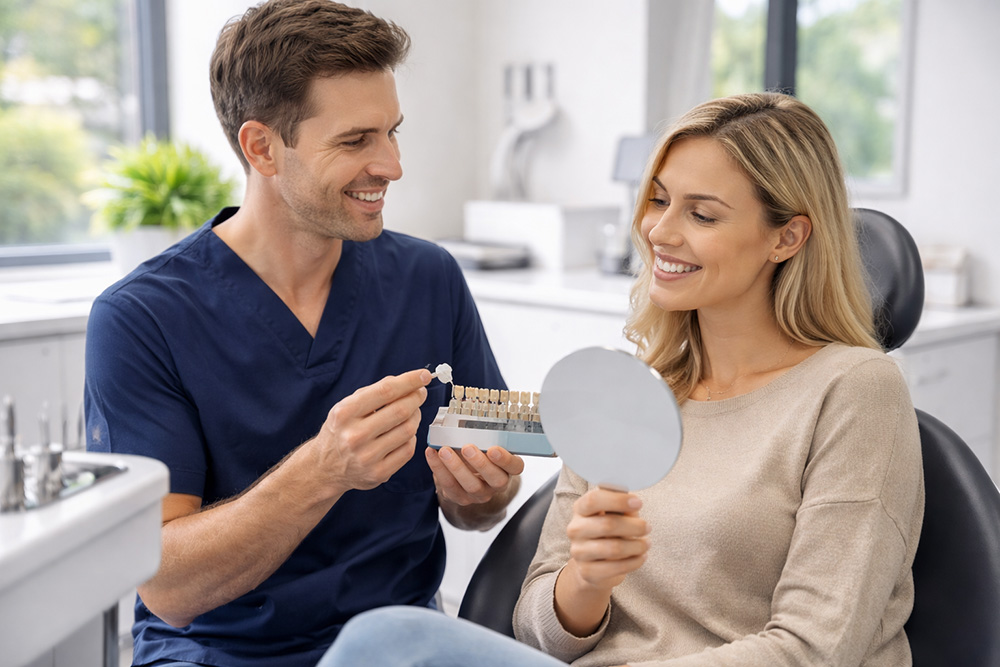
Digital smile design and intraoral scanning now allow patients to preview outcomes before any irreversible steps are taken. This transparency fosters informed consent and reduces unrealistic expectations—an essential component of ethical cosmetic care.
For dentists in Greenvale, these technologies support a collaborative process. Patients become participants in design decisions, not passive recipients of a predetermined “smile makeover.” This shared authorship strengthens trust and improves long-term satisfaction.
Psychological Considerations in Cosmetic Dentistry
One of the most important yet under-discussed aspects of veneers is their psychological impact. A smile is deeply tied to identity, self-expression, and confidence. Ethical veneer treatment acknowledges this emotional dimension.
Australian dentists are increasingly trained to recognise when cosmetic concerns may be driven by external pressure or unrealistic comparisons, often fuelled by social media. In these cases, ethical care may involve slowing the process, reframing expectations, or even recommending against veneers altogether.
This thoughtful approach reflects a broader shift within the profession—one that values patient wellbeing over procedural volume. It is also central to exploring the rising trends in cosmetic dentistry that prioritise mental and emotional health alongside aesthetics.
Local Context Matters
Greenvale’s demographic profile—characterised by growing families, professionals, and long-term residents—shapes how veneers are perceived and utilised. Patients often seek subtle improvements that integrate seamlessly into their daily lives rather than dramatic transformations.
This local context reinforces the importance of personalised treatment planning. Veneers designed for a media personality may not suit a Greenvale parent or professional. Ethical dentistry recognises that success is defined not by visibility, but by comfort and confidence.
Veneers as Part of a Long-Term Oral Health Plan
Perhaps the most significant shift in veneer philosophy is longevity. Veneers are no longer viewed as cosmetic endpoints, but as components within a lifelong oral health journey.
When designed conservatively and maintained properly, dental veneers can last well over a decade. More importantly, they can coexist with healthy gums, stable occlusion, and preserved tooth structure—outcomes that align with Australia’s preventive dentistry ethos.
In Greenvale, this long-term thinking resonates strongly. Patients are increasingly asking not just “Will this look good?” but “How will this age with me?”
A More Thoughtful Smile Future
The future of cosmetic dentistry in Australia is not louder, whiter, or more uniform. It is quieter, more individual, and ethically grounded.
Dental veneers remain a powerful expression of modern dentistry—but in places like Greenvale, their true value lies not in transformation, but in refinement. As patients and clinicians continue exploring the rising trends in ethical smile enhancement, veneers are finding their rightful place: not as symbols of vanity, but as instruments of considered care.